Get ready, be updated. Bringing you the latest news about the Climate Change Commission.


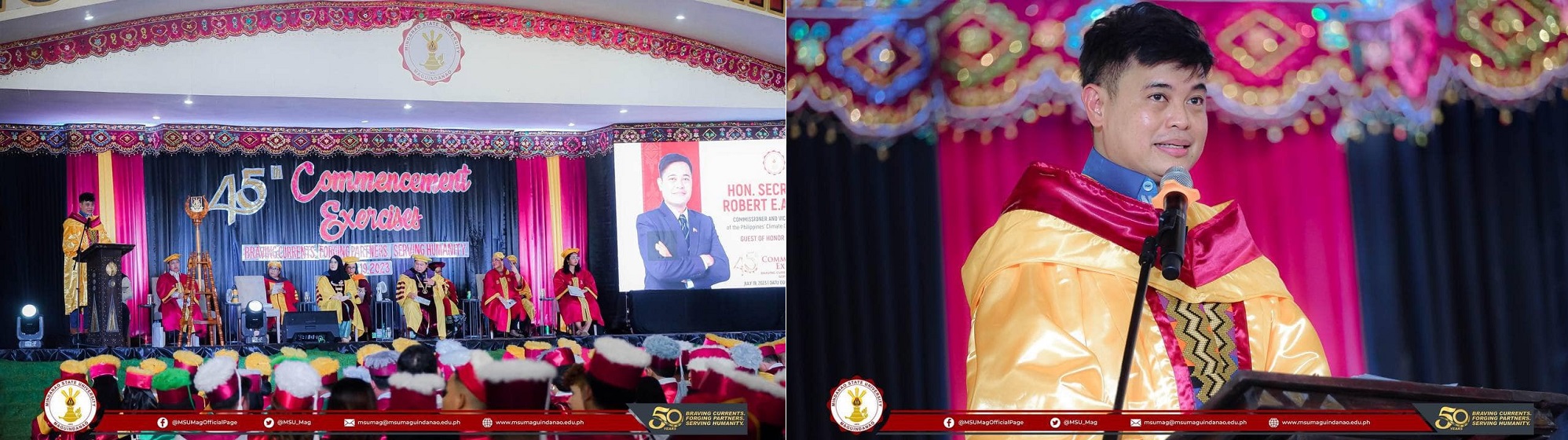
The Climate Change Commission joins Sultan Kudarat State University in its 16th University Day and Academic Recognition Day, celebrating excellence in education and leadership for a climate-resilient future. ISULAN, Sultan Kudarat — The Climate Change Commission (CCC) emphasized the vital role of the youth as future climate leaders and partners in building resilient communities during the Academic Recognition and 16th University Day of Sultan Kudarat State University (SKSU). CCC Vice Chairperson and Executive Director Robert E. A. Borje underscored that, while Sultan Kudarat is categorized under medium to low exposure to climate hazards based on the National Adaptation Plan (NAP), the province continues to experience intense heat and flooding, which directly affect communities and livelihoods. “When floods hit Lambayong, Lutayan, and Palimbang, it is not statistics that suffer—it is families. When drought affects Esperanza and Isulan, it is not reports that go hungry—it is the farmers,” Borje said. Borje stressed that climate change is no longer a distant or theoretical issue, but a lived reality for Mindanao communities—making education and youth participation critical to the country’s climate response. With more than 15,000 students across seven campuses, SKSU was recognized as a strategic center of talent whose academic excellence can translate into meaningful climate action at the local level. Borje encouraged students to become proactive contributors and problem-solvers, emphasizing that knowledge must lead to service. “Ang talino ninyo ang magiging panangga ng bayan. Ang kaalaman ninyo ang magiging sandigan ng lalawigan. At ang puso ninyo ang magiging lakas ng Republika.” This also highlights the role of state colleges and universities and higher education institutions in implementing the National Adaptation Plan, noting that adaptation efforts are built not only in policy spaces, but in classrooms, laboratories, farms, and communities. Borje encouraged SKSU to further strengthen its role as a technical partner of local government units in developing climate-resilient solutions. SKSU offers a wide range of academic programs aligned with the development priorities of the province, including agriculture, engineering, information technology, education, and health sciences. Its growing academic excellence is reflected in the recent achievement of three SKSU graduates who topped the licensure examinations for nursing, education, and engineering—underscoring the university’s impact in producing professionals vital to local development and resilience-building. The event marked SKSU’s 16th University Day and recognized students who demonstrated academic excellence, perseverance, and commitment to service. Present during the celebration were Governor Datu Pax Ali Mangudadatu, SKSU President Dr. Samson L. Mooa, Prof. Masrullizam Bin Mat Ibrahim, representative of Universiti Teknikal Malaysia Melaka, along with university officials, faculty members, and students. For more information on the CCC’s climate mainstreaming activities, visit www.climate.gov.ph and www.facebook.com/CCCPhl.
January 20, 2026 Tuesday
CCC Vice Chairperson and Executive Director Robert E.A. Borje delivers the keynote address at the 1st Manila Water Sustainability Leadership Talk in Quezon City, emphasizing the role of water utilities in aligning operations with the national plans to strengthen climate resilience. Quezon City – The Climate Change Commission (CCC) underscored the urgency of aligning the business strategies and investments of essential services, including water service providers, with the country’s national climate commitments during the 1st Manila Water Sustainability Leadership Talk in Quezon City. In his keynote address, CCC Vice Chairperson and Executive Director Robert E.A. Borje highlighted that for a water-stressed and disaster-prone archipelago, climate risk is systemic and must be managed in coherence with sectoral agencies and private operators while engaging the communities who are also active agents of resilience.  “Climate action does not succeed on policy alone. Nor does it succeed on infrastructure alone. It succeeds when institutions, communities, and individual Filipinos move together,” Borje said.  Moreover, he highlighted the central role of water utilities in strengthening climate resilience, noting that climate impacts directly affect water availability, infrastructure integrity, and service continuity, making climate action a governance and operational priority. “The role of water utilities is fundamental. We must ensure water security despite a changing climate, by climate-proofing infrastructure, diversifying water sources, and integrating nature-based solutions for watershed management,” Borje said. Highlighting the policies under the guidance of President Ferdinand R. Marcos, Borje underscored the Philippines’ Nationally Determined Contributions (NDC) and National Adaptation Plan (NAP) as the country’s core frameworks for addressing climate risks and advancing sustainable development. He emphasized that water utility companies contribute to national mitigation targets through improved wastewater treatment, energy efficiency, and low-carbon operations, while also advancing adaptation through risk-informed planning and resilient infrastructure. “This is where the idea of bridging sustainability and resilience becomes concrete,” Borje said. “When your sustainability strategies align with our NDC and our NAP, you are doing more than complying with policy. You are translating national commitments into daily realities for millions of Filipinos.” Affirming this view, Manila Water President and CEO Roberto Locsin underscored that providing service for sustainable solutions means more than just delivering the basic needs. “Every task we perform, every decision we make, can be transformed into direct climate action. This is the power of our work. It goes beyond operations, it shapes resilience for generations to come,” Locsin noted. The Sustainability Leadership Talk is Manila Water’s platform for engaging leaders from government, academe, and industry peers on sustainability and resilience. Its inaugural session, with the theme “Bridging Sustainability and Resilience for a Climate-Smart Future,” focused on climate action, public-private partnerships, and embedding resilience into organizational planning and operations. The CCC actively engages with the private sector as a core part of its mainstreaming strategy, recognizing business as a crucial partner in achieving national climate resilience. The agency leverages relevant pathways, such as bilateral partnerships and its system of contact groups, to sustain collaboration as a loop of action and ambition. Aligned with the national climate agenda and the country’s commitments under the Paris Agreement, the CCC reaffirmed its commitment to working with the private sector and other stakeholders to advance climate-resilient development and safeguard essential services amid a changing climate. 
January 19, 2026 Monday
The Climate Change Commission (CCC) convenes national government agencies (NGAs) to assess, ensure, and align their climate action plans with the National Adaptation Plan.   MANILA –The Climate Change Commission (CCC) convened national government agencies (NGAs) in a two-day Stocktaking Workshop for Climate Programs and Indicators to strengthen and harmonize their climate action plans with the National Adaptation Plan (NAP). The workshop served as a platform for National Government Agencies (NGAs) to assess existing climate programs, identify gaps, and align sectoral priorities with the NAP, the country’s long-term, science-based, and evidence-based framework that aims to reduce climate-related loss and damage while building adaptive capacity toward transformative resilience and sustainable economic development by 2050. Developed under the leadership of President Ferdinand R. Marcos Jr., the NAP reflects the administration’s vision of a climate-smart and climate-resilient Philippines, ensuring that adaptation efforts are integrated across policies, programs, and public investments. CCC Vice Chairperson and Executive Director Robert E.A. Borje underscored the importance of the NAP as a practical and responsive framework for addressing climate risks. “The National Adaptation Plan is more than a policy document—it is our shared blueprint for how the government responds to climate risks in a systematic, coordinated, and accountable manner,” Borje said. The workshop was organized into breakout sessions covering key adaptation sectors, including Agriculture, Fisheries, and Food Security; Water Resources; Health; Ecosystems and Biodiversity; Cultural Heritage; Population Displacement and Migration; Land Use and Human Settlements; Energy, Transport, and Communications; and Livelihoods and Industries. These discussions enabled agencies to exchange best practices, surface operational challenges, and identify opportunities to strengthen sectoral adaptation actions consistent with national priorities. Borje emphasized that climate resilience requires sustained collaboration and shared accountability across government institutions. “Building climate resilience is both a technical endeavor and a governance responsibility. It requires sound science and robust indicators, but it also requires leadership, collaboration, and a shared sense of purpose.” “As public servants, we are not merely reporting progress—we are shaping how the government protects lives, livelihoods, and development gains in the face of a changing climate,” Borje added. The workshop brought together various NGAs, including the Department of Agriculture–Climate Resilient Agriculture Office, Department of Science and Technology–Industrial Technology Development Institute, Department of Transportation, and the Department of Environment and Natural Resources, reaffirming a whole-of-government approach to advancing climate adaptation under the NAP. For more information on the CCC’s climate mainstreaming activities, visit www.climate.gov.ph and www.facebook.com/CCCPhl.
December 26, 2025 Friday
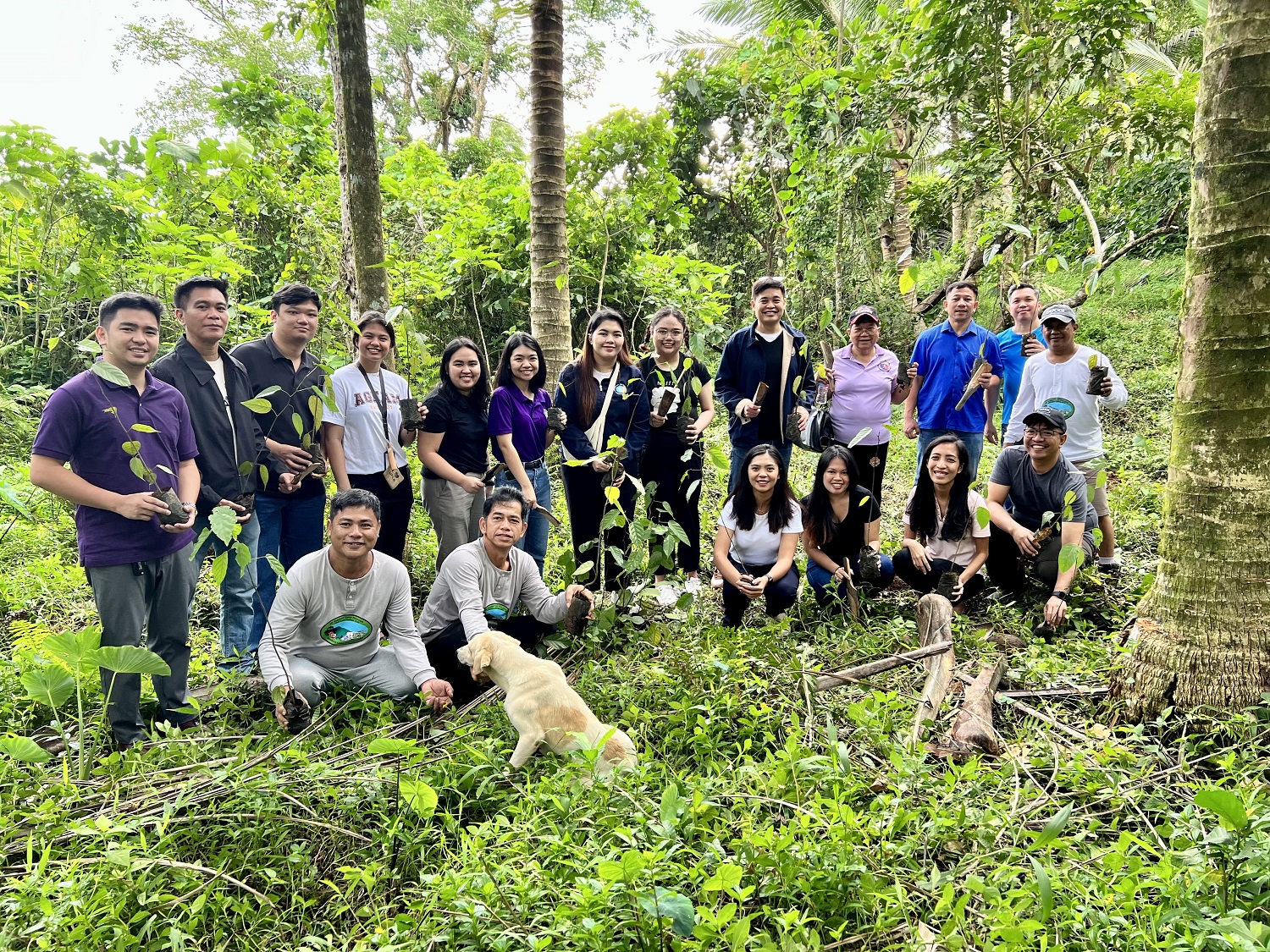
CCC joins Cotabato State University (CotSU) College of Forestry representatives in planting Malugay (Pometia pinnata) seedlings, a native Philippine hardwood tree, as part of a collaborative greening and resilience-building activity on campus. MANILA, 26 December 2025 — The Climate Change Commission (CCC) visited key state universities and colleges (SUCs) in Mindanao to strengthen collaboration in localizing climate resilience efforts and empowering communities as climate champions. The CCC recently met with officials from the Sultan Kudarat State University (SKSU) and Cotabato State University (CotSU) to advance convergence on climate adaptation, research, and capacity building. In a meeting with SKSU President Dr. Samson L. Molao and his team, CCC Vice Chairperson and Executive Director Robert E.A. Borje discussed leveraging the university’s critical role as an academic and research hub to build local climate capacities. The dialogue emphasized SKSU’s potential in driving evidence-based climate action in the region, with sustained support from Senator Loren Legarda, a long-time advocate for empowering SUCs. "The CCC will continue to engage stakeholders in line with President Ferdinand R. Marcos Jr.’s vision of a climate resilient Philippines. We are turning communities into champions for climate,"  said Borje. Separately, Borje met with CotSU President Dr. Sema G. Dilna and team, focusing on mobilizing SUCs to localize the National Adaptation Plan (NAP) and build capacities for transformative climate action. Developed under the leadership of President Ferdinand R. Marcos Jr., the NAP aims to steadily reduce climate-related loss and damage and to build the country’s adaptive capacity toward transformative resilience and sustainable economic development by 2050. The NAP serves as a national instrument for pursuing efforts at all levels of governance to address climate risk and reduce the country's vulnerability to climate change impacts by bolstering adaptive capacity, fostering resilience, and integrating adaptation into relevant policies and programs. It specifically identifies SUCs as supporting agencies in several key adaptation strategies, recognizing their critical role in translating national policy into local, on-the-ground action. For the health sector, SUCs support the reinforcement of primary care and community health workers, aimed at minimizing patient mortality from climate-sensitive diseases. They also contribute to the development of resilient health networks, which ensures seamless access to climate-responsive health services. In the area of ecosystems and biodiversity, SUCs are positioned to support the protection and rehabilitation of biodiversity across habitats and ecosystems, as well as enabling and empowering communities to lead ecological management. This includes helping establish collaborative research partnerships between local communities, researchers, and environmental organizations to provide access to scientific expertise, enabling ecological assessment and better-informed decisions at a local level to improve the resiliency of ecosystems. The engagement at CotSU also included a symbolic tree-planting activity at the university’s College of Forestry. Together, CCC and CotSU officials planted Malugay (Pometia pinnata) seedlings—a native, fruit-bearing hardwood tree valued for its strength and ecological benefits. "Every tree planted and grown is a step towards renewing its value for our communities," Borje stated. "We thank the CotSU College of Forestry for choosing this species and for working with us to ensure these trees—and our partnership—grow strong." These back-to-back engagements underscore the CCC’s strategy to harness the unique position of SUCs as centers of innovation, education, and community extension to mainstream climate action at the local level. For more information on the CCC’s climate mainstreaming activities, visit www.climate.gov.ph and www.facebook.com/CCCPhl.
December 26, 2025 Friday
PAETE, LAGUNA | 26 December 2025 — The Climate Change Commission (CCC) in coordination with the local government of Paete, Laguna and with support from the Ayala Foundation, conducted its 2nd Community Outreach Program on 19 December 2025 at the New Agarao Covered Court in Paete, Laguna. A part of the CCC’s annual community engagement initiatives, this program was organized to provide assistance to the residents of Paete who were severely affected by recent typhoons. Through the activity, 200 families received Christmas baskets, while 63 children were given kiddie meals and goodie bags, reinforcing shared efforts to extend relief, strengthen community solidarity, and support recovery in climate-vulnerable communities. Paete, a fourth-class municipality, relies heavily on agriculture for livelihoods, making it particularly vulnerable to climate hazards. "Layunin ng Climate Change Commission na magbigay ng kaalaman, kagamitan, at suporta upang tulungan kayong makabangon at maging mas handa sa mga darating pang pagsubok," said CCC Vice Chairperson and Executive Director Robert E.A. Borje through Deputy Executive Director Romell Antonio Cuenca. “Napakalaking tulong ng mga programa ng Climate Change Commission at higit pa rito ay ang kanilang patuloy na suporta sa mga proyekto ng Laguna katulad ng renewable energy. Ang outreach program na ito, sa tulong din ng Ayala Foundation, ay malaking biyaya para sa mga farmers,” said Mayor Ronald Cosico of Paete, Laguna, thanking the CCC for conducting its outreach program in Paete for two consecutive years. Correspondingly, Cenen Milan Jr., Lead of Corporate Citizenship and Volunteerism Program of Ayala Foundation, conveyed their message of support for the same program and for the CCC for its activities. “Masaya po kaming makabalik sa Paete, Laguna at sa pagkakataong ito ay para mamahagi ng tulong. Para naman sa Climate Change Commission, bilang patunay nga po ng partnerships ay aming susuportahan ang mga susunod na proyekto lalo na po ang nasa aming community development areas,” Milan expressed. As the CCC strengthens its efforts to combat climate change and strengthen adaptation measures, it continues to focus on helping vulnerable communities, ensuring no one is left behind in the journey toward a climate-resilient future. For more information on the CCC’s climate mainstreaming activities, visit www.climate.gov.ph and www.facebook.com/CCCPhl.
December 26, 2025 Friday
Photographs featuring the country’s development challenges and opportunities are showcased in the three-day photo exhibit titled “The Clock is Ticking: SDG Action Now.” MANILA — The Climate Change Commission (CCC) joined the House of Representatives Committee on Sustainable Development Goals in the opening of the three-day photo exhibit “The Clock is Ticking: SDG Action Now,” wherein SDGs are emphasized as central to the country’s national development agenda.  In his message, CCC Vice Chairperson and Executive Director Robert E.A. Borje underscored that SDGs, particularly SDG 13 or Climate Action, highlight how the country’s resilience depends on decisively addressing development gaps that continue to place communities at risk.  He noted that climate action is not limited to SDG 13. It also serves as a powerful enabler of progress across the 2030 Agenda, supporting efforts to reduce poverty and hunger, ensure water security, protect ecosystems, and strengthen resilient infrastructure and sustainable cities—key themes featured in the exhibit. Rep. Jose Manuel Alba, Chair of the Committee on SDGs, likewise underscored that SDGs must be treated as concrete commitments rather than abstract aspirations. He emphasized the need to translate targets into clear timelines, adequate budgets, and accountable measures as the country enters the final stretch toward 2030. “The SDGs are not meant to be aspirational goals; they were meant to be commitments to timelines, budgets, and consequences,” Alba said. The photo exhibit features images that aim to go beyond depicting adaptation and mitigation efforts, illustrating instead the “Filipino qualities of discipline, cooperation, and resolve” in responding to climate and development challenges. ”Together, we must renew and reaffirm the commitment and resolve to advance climate action that is science-based, equitable, and grounded in the realities of daily life across our provinces and cities,” Borje added. Speaking on the need to enhance the country’s climate resilience, he emphasized that policies such as the Philippine Development Plan, the Nationally Determined Contribution (NDC), and the National Adaptation Plan (NAP) are the country’s foundations for low-carbon, climate-resilient growth. “These are not merely policy documents, they are guides for more coherent systems, better governance, and stronger protection for our people.” Borje also highlighted the pivotal role of the legislature in the final push toward 2030, stressing that the remaining four years require decisive, coordinated, and forward-looking action. “Time is indeed ticking. But we are not bound by the clock. When we act together, urgency becomes momentum. And momentum can lead to lasting transformation.” The photo exhibit can be viewed in the North Wing Lobby, House of Representatives, Quezon City from December 9 to 11, 2025. The CCC reaffirmed its commitment to deepen collaboration with local governments, national agencies, civil society, the private sector, communities, and Congress to advance climate action that is science-based, equitable, and responsive to the realities on the ground. Through these efforts, the Commission aims to strengthen resilience, safeguard development gains, and build a sustainable future for all Filipinos.
December 15, 2025 Monday
Officials and representatives from the CCC, DILG-LGA, CHED, and PASUC sign a commitment to action to more effectively implement the NAP at the local level. MANILA, 12 December 2025 — In a historic step toward accelerating on-the-ground climate action, the higher education sector, local government units, and key government agencies formalized a collective pledge to support the localization of the National Adaptation Plan (NAP) 2023-2050. A “Commitment to Action” was signed by officials and representatives from the Climate Change Commission (CCC), Department of the Interior and Local Government - Local Government Academy (DILG-LGA), the Commission on Higher Education (CHED), and the Philippine Association of State Universities and Colleges (PASUC). This pledge aims to strengthen collaboration among State Universities and Colleges (SUCs), Local Government Units (LGUs), and National Government Agencies (NGAs) to more effectively implement the NAP at the local level. This is the country's primary strategy for building resilience and reducing vulnerability to the impacts of climate change. Under the pledge, academic institutions committed to fully harness the potential of SUCs as centers of local knowledge, technology, and innovation, to provide LGUs with science-based data and tools for context-specific adaptation solutions. The agencies and SUCs further pledged to work together to train and support local governments in conducting climate risk assessments, managing greenhouse gas inventories, and mainstreaming the NAP into their local development and land use plans. “Through knowledge sharing and collaboration, we can help nurture future world-class climate leaders, actors, and even future IPCC authors—individuals equipped to drive solutions at every level,” said Senator Loren Legarda. As support from national agencies, the CCC, DILG-LGA, and CHED committed to assisting both SUCs and LGUs in formulating and implementing effective Local Climate Change Action Plans (LCCAPs), and to ensure that projects and programs are evidence-based and risk-informed. The Commitment to Action was signed during the Knowledge Exchange Forum, which was attended by presidents of SUCs and representatives from national agencies. The Forum, with the theme “From Knowledge to Action: Championing the Role of the State Universities and Colleges for Accelerated Climate Action,” highlighted the critical role of state universities and colleges as “local knowledge hubs” that will link science, policy, and on-the-ground action. Through their research, training, and extension services, they will serve as partners of local governments in shaping climate solutions based on indigenous knowledge and community needs. Coinciding with the signing, a formal coordination platform was also launched to enable more systematic linkages among LGUs, leagues of local officials, SUCs, and Regional Development Councils (RDCs) for faster local NAP implementation. “This signing is a clear and firm signal of our collective dedication to lay down the necessary foundations so that every community in the Philippines becomes prepared and resilient to a changing climate,” stated CCC Vice Chair and Executive Director Robert E.A. Borje. “By linking the knowledge of our universities with the actions of our local governments, we will undoubtedly accelerate the achievement of a climate-resilient future for all Filipinos.” The Knowledge Exchange Forum is part of the celebration of the 18th Global Warming and Climate Change Consciousness Week in accordance with Presidential Proclamation No. 1667, s. 2008. For more information on the CCC’s climate mainstreaming activities, visit www.climate.gov.ph and www.facebook.com/CCCPhl.
December 12, 2025 Friday
(Photo courtesy of OneSports.PH) Professional volleyball player and climate advocate Bryan Bagunas proudly carried the Philippine flag at the opening ceremony of the 32nd Southeast Asian Games (SEA Games), alongside tennis star Alex Eala, at the Rajamangala National Stadium in Bangkok. More than a ceremonial honor, Bagunas’ role as flag bearer represents a broader victory for the Philippines—one where athletic excellence converges with purpose-driven advocacy. A committed climate advocate, Bagunas is one of the Filipino athletes who are using their platforms to advance the intersection of sports and climate action, while promoting sustainability within sporting communities.                               By leading the Philippine delegation, Bagunas embodies resilience, discipline, and collective responsibility—values that echo the country’s continuing push for climate action and sustainable development. His presence on the international stage sends a powerful message: Filipino athletes can be champions not only in competition, but also in advancing causes that protect people, communities, and the future. Reflecting on his journey, Bagunas underscored the growing impact of hosting and participating in international tournaments in the Philippines. “Actually, sobrang naging malaking impact yung pagdadala ng mga international tournaments sa ating [bansang] Pilipinas,” he shared. “Siyempre, nagpapasalamat tayo sa PNVF at sa lahat ng sumusuporta sa Philippine volleyball. Kung hindi dahil sa kanila, hindi tayo mapapansin.” Bagunas began his volleyball career with the National University (NU) Bulldogs, leading the team to back-to-back championships in the University Athletic Association of the Philippines (UAAP) Men’s Volleyball League in Seasons 80 and 81. He was named Finals Most Valuable Player in both seasons, earned the Best Server award three consecutive times from Seasons 79 to 81, and capped off his UAAP stint in Season 81 as Season MVP. Beyond the collegiate stage, Bagunas made his mark in the regional arena as a key member of the Philippine Men’s Volleyball Team, contributing to the country’s historic silver medal finish at the SEA Games 2019—its first podium finish since 2005. His performance drew international attention, leading to a stint with Oita Miyoshi Weisse Adler in Japan in mid-2019. In August 2022, he joined Taichung Win Streak, where he earned the Most Valuable Player award in Taiwan’s Top Volleyball League (TVL) Season 2022–2023 as an outside hitter. Beyond volleyball, the 6-foot-5 outside hitter has emerged as a passionate advocate for climate action. Having witnessed firsthand the devastating impacts of typhoons across the Philippines, Bagunas continues to highlight the urgent need to address improper waste management and strengthen climate resilience in communities—anchoring his advocacy as a climate champion in the making. The Climate Change Commission (CCC) stands with Filipino athletes like Bryan Bagunas, whose moments on the global stage demonstrate how sports can amplify climate awareness, inspire collective action, and rally Filipinos toward a more sustainable and climate-resilient future.
December 11, 2025 Thursday
The Climate Change Commission, led by Vice Chairperson and Executive Director Robert E.A. Borje and Deputy Executive Director Atty. Romell Antonio O. Cuenca, signed a Memorandum of Understanding with GGGI officials led by Asia Regional Director Dr. Malle Fofana and Deputy Regional Director and Country Representative Mr. Marcel J. Silvius. MANILA – The Climate Change Commission (CCC) has signed a Memorandum of Understanding (MOU) with the Global Green Growth Institute (GGGI), further strengthening a partnership that aims to advance climate resilience and promote green growth in the Philippines. Recognizing that the climate crisis demands a whole-of-society approach, the CCC underscored the importance of sustained collaboration with key development partners such as the GGGI. The renewed engagement reaffirms the country’s commitment to pursue science-based, inclusive, and forward-looking solutions to climate challenges. CCC Vice Chairperson and Executive Director Robert E.A. Borje highlighted the significance of the joint work between the Commission and GGGI. “This allows us to jointly work in critical areas: from crafting science-based Green Growth Development Plans for our regions and cities, to strengthening the policy architecture that enables a low-carbon economy, and empowering our communities through knowledge and innovation.” Dr. Malle Fofana, Asia Regional Director of the Global Green Growth Institute, emphasized that the renewed partnership is both timely and crucial. “This partnership is really timely and I’m glad that we were able to renew it. We are family and your agenda is our agenda. The contribution of the Philippines as a core contributing member amplifies and champions green growth through partnership, enabling impact aligned with national priorities." The partnership with the GGGI reflects the broader imperative for stronger cooperation across sectors—government, development organizations, private institutions, and communities—to foster sustainability, strengthen resilience, and support the country’s transition toward a low-carbon and climate-smart future. Deputy Executive Director Atty. Romell Antonio O. Cuenca echoed this message, stressing that collaboration accelerates progress. “It is through such collaborations that we can amplify our impact, share innovation, and translate high-level policies into tangible, life-improving actions on the ground, especially for our most vulnerable communities.” Mr. Marcel J. Silvius, Deputy Regional Director and Country Representative of GGGI, underscored the critical role of the CCC in driving climate action. "I cannot stress enough how important the partnership with the Climate Change Commission is as an overall policy driver for climate change and for development-oriented projects in the Philippines. Together, we are advancing concrete initiatives that mobilize investment and deliver scalable impact." The CCC remains steadfast in engaging with various sectors to advance climate action domestically and globally, reaffirming its commitment to building a climate-resilient and sustainable Philippines. For more information on the CCC’s climate mainstreaming activities, visit www.climate.gov.ph and www.facebook.com/CCCPhl.
December 09, 2025 Tuesday
Climate leaders, partners, and advocates gather at the 2025 Solidarity Night to celebrate the culmination of the Global Warming and Climate Change Consciousness Week.   MANILA, 5 December 2025 — President Ferdinand R. Marcos Jr. reaffirmed the Philippines’ commitment to decisive climate action in his message during the 2025 Solidarity Night, the culminating activity of the 18th Global Warming and Climate Change Consciousness Week (CCC Week). Hosted by the Climate Change Commission (CCC), the event showcased the country’s progress on the Nationally Determined Contribution Implementation Plan (NDCIP) and emphasized a whole-of-nation approach to climate action. “Let us uphold climate governance, protecting the beauty and bounty of our land, while seeking effective ways to ensure the welfare of generations to come,” Pres. Marcos said. “Together, let us nurture a nation that leads with foresight and thrives with purpose—one that is resilient, future-ready, and responsive to the needs of both people and the planet.” Highlighting resilience, the President pointed to ongoing initiatives under the National Adaptation Plan, the NDCIP, and efforts in renewable energy, sustainable agriculture, and climate finance as foundations for a future “that leaves no Filipino behind.” Department of Environment and Natural Resources Secretary Raphael P.M. Lotilla, the Official Representative of the President to the CCC, emphasized that building resilience goes beyond policies and programs. “It requires compassion, commitment, and collaboration. It means supporting local innovations, empowering communities, and transforming development pathways into ones that are sustainable, inclusive, and just.” CCC Vice Chairperson and Executive Director Robert E.A. Borje highlighted the event’s unifying spirit. “Let this be our continuing challenge: to work for the last, the least, the lost, and the most vulnerable. In doing so, we can become the change our country and the world need,” he said. Borje stressed that partnership remains central to the Philippines’ climate agenda, as embodied in the Active Climate Change Engagement Leading to Resilient, Adaptive and Transformative Empowerment (ACCELERATE) Framework, which drives inclusive, participatory, and whole-of-nation climate governance. Speakers from various sectors shared their contributions. ACEN President and CEO Eric Francia highlighted the urgency of measurable mitigation amid rapid growth. “The Philippines is growing quickly, industries are expanding, and power demand is rising, yet we remain one of the most climate-vulnerable nations. As we grow, we need to make sure we are also cutting emissions in a real and measurable way. That’s the heart of mitigation, and this is why the Philippines’ NDC does matter.” Tebtebba Executive Director Helen Biangalen-Magata stressed the importance of supporting Indigenous Peoples. “Indigenous Peoples are among the most vulnerable,facing land dispossession, loss of cultural heritage, and threats to their very way of life. By embracing and supporting Indigenous knowledge and rights, we not only honor their contributions but also strengthen our own capacity to adapt and thrive.” Mayor Alfredo Coro II of Del Carmen, Siargao emphasized empowering local governments: “Most actions and impacts are managed and governed by LGUs. If we all work for local climate solutions, then all local climate solutions will benefit us all.” From the private sector, PLDT and SMART Chief Sustainability Officer Melissa Vergel De Dios highlighted the importance of resilient digital infrastructure. “We recognize our key role in empowering businesses and connecting Filipinos, especially in remote and isolated areas. We aim to minimize network downtime by fortifying our systems, taking into account climate change, changing weather patterns, and extreme climate.” UN Women Philippines Ambassador Vanessa Vianca S. Pallarco-Yu stressed gender-responsive climate action. “With the Belém Gender Action Plan now in force, we have an even stronger time-bound global mandate to scale these efforts. When climate action is gender-responsive, it becomes more just, more inclusive, and more effective.” Food and Agriculture Organization Philippines Representative Lionel Dabbadie emphasized that transformation happens where ambition meets implementation. “Ambition without implementation leads to frustration, but implementation without ambition leads to stagnation. Transformation happens where ambition meets implementation—it is urgent, it is lived, and it is real.” Started in 2024, Solidarity Night was established to highlight the thematic strategies of the National Adaptation Plan 2023–2050. The 2025 edition focused on mitigation and the NDCIP, underscoring the country’s resolve to advance from planning to full-scale implementation of long-term climate objectives. Guests concluded the event by signing a collaborative artwork made from various indigenous fabrics, symbolizing their commitment to climate action, unity, cultural preservation, and shared responsibility for a whole-of-nation climate effort. The event reaffirmed the CCC’s belief that climate leadership is a shared responsibility, strengthened by partnership, grounded in evidence, and driven by collective resolve. The country can meet its climate goals only through collaboration among government, communities, development partners, the private sector, academe, and civil society, working together to create a low-carbon, climate-resilient, and sustainable future for all Filipinos.
December 05, 2025 Friday
The Climate Change Commission joined the 103rd National Assembly of the League of Vice Governors of the Philippines to emphasize the crucial role of Vice Governors in risk governance. MANILA – The Climate Change Commission (CCC) highlighted the critical role of Vice Governors in strengthening risk governance and building climate-resilient communities during the 103rd National Assembly of the League of Vice Governors of the Philippines (LVGP) Year-End National Assembly. Vice Chairperson and Executive Director Robert E.A. Borje emphasized that Vice Governors occupy “the critical intersection where plans meet priorities, where evidence meets action, and where strategy becomes alignment across the entire province.” He said this strategic position enables Vice Governors to lead efforts that protect lives, sustain livelihoods, and secure the future of their provinces. Borje linked this leadership role to national policy frameworks, particularly the National Adaptation Plan (NAP), which guides communities in identifying locally appropriate adaptation practices and projects based on specific vulnerabilities. The NAP, developed under the leadership of President Ferdinand R. Marcos Jr., reflects the administration’s vision and plan of action for a climate-smart and climate-resilient Philippines. “These insights allow Vice Governors to understand—not vaguely, but precisely—what hazards your provinces face and how those hazards intersect with population, livelihoods, and infrastructure,” he said. He stressed that Local Climate Change Action Plans (LCCAPs) must be anchored in the NAP to ensure provincial strategies are science-driven, evidence-based, and aligned with national priorities. Such alignment strengthens risk governance by making adaptation actions responsive, measurable, and sustainable. Borje also highlighted the People’s Survival Fund (PSF) as a key financing mechanism for local adaptation initiatives. From 2023 to 2025, the PSF Board significantly accelerated the approval of projects and Project Development Grants, resulting in a sharp increase in fund utilization from just over 30 percent to near full commitment. By May 2024, the initial Php 1 billion allocation had been fully committed and exceeded by Php 321.6 million. To sustain this expanded pipeline, an additional Php 1 billion was appropriated under the 2025 GAA, bringing the portfolio to 15 projects and 9 PDGs with a total value of approximately Php 1.4 billion. “These developments make the PSF a more accessible and reliable financing option, helping local governments secure funds to strengthen climate resilience in their communities,” he said. However, Borje acknowledged that there continues to be room for growth and development in the PSF application process. He underscored the CCC’s commitment to sustain joint efforts with the PSF Board Chair and Secretariat Department of Finance and PSF Board members to explore ways of further improving and strengthening application and implementation support mechanisms for LGUs. While urging Vice Governors to continue championing resilience and good governance, Borje also noted the importance of a whole of government and whole of society approaches to help ensure that government processes and systems remain responsive to the needs of and lead to more robust sustainable development and climate resilience. The LVGP, a national organization composed of Vice Governors from across the country, provides a platform for members to share experiences, discuss common challenges, coordinate policies, and exchange best practices to strengthen governance at the provincial level. For more information on the CCC’s climate mainstreaming activities, visit www.climate.gov.ph and www.facebook.com/CCCPhl.
December 05, 2025 Friday
The Climate Change Commission, led by Vice Chairperson and Executive Director Robert E.A. Borje, convened the agreement signing for the 2026 cohort scholars in the Sustainable Leadership Learning on Climate and Disaster Risk Reduction program.   MANILA – The Climate Change Commission (CCC), in support of the Office of Senator Loren Legarda, continues its partnership with the Asian Institute of Management (AIM) to strengthen the capacity of climate leaders through the Sustainable Leadership Learning on Climate and Disaster Risk Reduction (SLL-CDRR) Scholarship Program. A signing ceremony was recently held for the new cohort of scholars, marking more than a formal agreement. “Today, you accepted a profound responsibility. You are now the designated champions within your respective agencies. The knowledge and skills you will acquire are not for your benefit alone; they are a trust granted to you by the Filipino people,” said Robert E.A. Borje, Vice Chairperson and Executive Director of the CCC. Supporting this message, Professor Erin L. Downey, Head of the Stephen Zuellig Graduate School of Development Management at AIM, emphasized, “This is far more than just paperwork. It is a commitment to your country and to the generations to follow. We look forward to witnessing the impact you will make. Let the work begin.” This marks the second year of the SLL-CDRR Program, which now welcomes the 2026 cohort. A total of 28 scholars were accepted, divided into two tracks: the Executive Masters in Disaster Risk and Crisis Management (EMDRCM) and the Master of Science in Data Science (MSDS). Under the EMDRCM program, 24 scholars will undertake an 18-month program focusing on management approaches to disasters and crises in the Asian region. The curriculum includes analytical methods, operational tools, and strategic systems that guide leaders in disaster risk and crisis management across different contexts and scales. Meanwhile, four scholars will pursue the 15-month MSDS program, deepening their expertise in data science and its role in formulating data-driven strategies to address real-world challenges, including those related to climate change and disaster risks. The scholars are expected to specialize in climate change adaptation and mitigation (CCAM) and disaster risk reduction and management (DRRM), producing academic outputs aligned with the CCC’s policy priorities. The program’s first batch, which started last year, is set to graduate in the coming days, further showcasing the program’s continued success in developing capable climate and disaster resilience leaders. Meanwhile, Borje extended his warmest congratulations to the 2025 cohort, noting that they are true agents of change whose leadership will shape programs and policies addressing climate and disaster risks nationwide. The SLL-CDRR scholars come from national government agencies with mandates related to climate change and disaster risk reduction. Their participation strengthens the government capacity to plan, implement, and scale policies and programs that address climate and disaster risks. The students undergo a rigorous selection process that includes evaluation of their climate-related work, aptitude tests, and interviews. In line with this, the selection of scholars ensures gender balance, with 50 percent of slots specifically allocated for women. Furthermore, the scholars come from a wide range of regions, including CAR, Regions II, III, IV, IV-A, VI, VII, VIII, IX, XI, XII, XIII, and NCR, ensuring diverse geographic representation across the country. Through the SLL-CDRR Program, the government aims to build strategic human capital in pursuit of its mandates on climate change adaptation and mitigation and disaster risk reduction and management, contributing to a Philippines that is more resilient, adaptive, and sustainable. The CCC extends its deepest gratitude to Senator Legarda for her continued support in nurturing climate leaders and strengthening their capacity to build a more climate-resilient Philippines. For more information on the CCC’s climate mainstreaming activities, visit www.climate.gov.ph and www.facebook.com/CCCPhl.
December 04, 2025 Thursday
Participants from national government agencies, private sector, civil society organizations, academe and development partners convened in “Philippines NDC 2025: Raising Ambition Towards a Climate-Resilient Future” held on 03 December 2025 in Mandaluyong City. MANILA, Philippines | 3 December 2025 — As the Philippines continues preparations for its Nationally Determined Contribution (NDC) 2025 submission, the Climate Change Commission (CCC) engaged key partners in a stakeholder consultation to strengthen the country’s efforts to update the NDC based on evolving priorities and national circumstances. The consultation activity focused on presenting the indicative NDC 2025 overall and sectoral commitments, ensuring that these reflect national development priorities and stakeholder concerns. The Official Representative of the President to the CCC, Secretary Raphael P.M. Lotilla of the Department of Environment and Natural Resources (DENR) underscored the importance of recalibrating from the business-as-usual scenario to reflect the current economic realities and sectoral growth and improved emissions data. This recalibration, he noted, is crucial to strengthen accuracy, transparency and integrity. “To deliver on the NDC, we continue to fortify our monitoring, reporting and verification systems so that we can measure progress, identify gaps and refine policies as needed.” CCC Vice Chairperson and Executive Director Robert E.A. Borje emphasized that this part of the updating process scales up climate action and lays out a clear and ambitious pathway across all sectors that is anchored on transparency and broad ownership. “By linking our natural ecosystems with energy, transport, industry and agriculture, we are not just setting targets on paper, we are creating a roadmap that turns ambition into action that builds a resilient, low-carbon and inclusive future,” Borje said. Sectoral agencies—DENR, Department of Energy, Department of Transportation, and Department of Agriculture—presented their respective mitigation pathways, including finalized policies and measures (PAMS), mitigation potentials, and sectoral targets covering energy, transport, agriculture, forestry and land use (FOLU), waste, and industrial processes and product use (IPPU). These presentations underscored significant opportunities for emissions reduction and resilience-building, while also outlining challenges that require strengthened cooperation among national and local governments, the private sector, and development partners. In the afternoon breakout sessions, participants from government, civil society, academe, LGUs, and development partners engaged in open dialogues to provide detailed inputs on sectoral commitments. Discussions focused on ensuring that NDC targets are actionable, achievable, and aligned with local realities—particularly on just transition pathways, financing needs, capacity building, and monitoring and reporting mechanisms. Key messages from the breakout groups highlighted the need to accelerate renewable energy deployment, strengthen sustainable transport systems, protect natural ecosystems, ensure food security, scale up nature-based solutions, enhance waste management systems, and increase support for local governments who serve as frontliners in climate action. The CCC noted that insights gathered through the engagement will feed into the finalization of the NDC 2025, ensuring that the document not only raises ambition but also reflects a unified national effort to contribute to the global 1.5°C goal. These efforts aim to not only perform the whole-of-government approach alone, but also to highlight that the NDC pursues an economy-wide and whole-of-society approach to ensure legitimacy, broad ownership, and collective resolve needed to turn commitments into real and lasting outcomes.
December 03, 2025 Wednesday
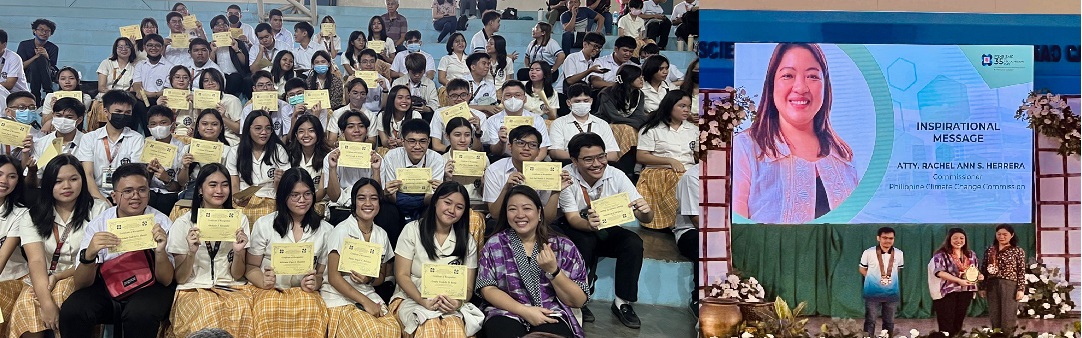
Women and Youth Awardees of the Philippine Resilience Awards 2025 held at the Philippine Normal University as part of the 18th Global Warming and Climate Change Consciousness Week. MANILA – The Philippine Resilience Awards (PRA) honored three women and five young climate champions whose initiatives are strengthening resilience in their communities. The ceremony was held at the Philippine Normal University in Manila as part of the 18th Global Warming and Climate Change Consciousness Week (CCC Week). Nominees underwent rigorous assessment and field validation conducted by experts from partner institutions. The evaluation focused on how each initiative reduces vulnerability, strengthens local capacities, and advances innovation in climate and disaster resilience. From this process, exemplary awardees emerged in both the Women and Youth categories. In the Women’s Category, Undersecretary Diana Rose S. Cajipe of the Department of Social Welfare and Development was recognized for the  Buong Bansa Handa Program, a supply chain model that enhances operational readiness in relief delivery. Jenelyn J. Salimbagat of the National University received recognition for the Family Emergency and Disaster Preparedness Plan (FEDPP), a household-based program that equips individuals—especially youth—with practical preparedness skills. Renebelita F. Fuentebella, Co-Founder and Vice Chair of Damit Dignidad Pilipinas, was recognized for leading the collection and distribution of pre-loved clothing and essential personal items for humanitarian response. Five young climate champions were recognized in the Youth Category: Raymart S. Garcia of Barangay Commonwealth, Quezon City, was awarded for the Reskyusi Food Basket Program, which addresses malnutrition and food wastage through sustainable food systems. Val Amiel Vestil from the Association of Young Environmental Journalists was honored for Kwentong Kalikasan, a storytelling initiative that builds ecological awareness and climate resilience. Shri Tahanie B. Macaumbao of the National Youth Council received recognition for Green by Design, which promotes waste reduction and water sustainability in communities around Lake Lanao. Engr. Christian B. Hernandez of Mindanao State University was recognized for Project MOSES, an Internet of Things (IoT) - based weather monitoring system that addresses gaps in localized, real-time weather data in Oriental Mindoro. Peter John C. Enorio of Cebu Technological University was honored for the Subang Environmental Initiatives, which restore degraded lands and empower communities through nature-based adaptation solutions. Now in its third year, and anchored on the theme “Kababaihan at Kabataan: Katuwang sa Paghahabi ng Isang Matatag na Bayan,” the PRA highlighted the essential role of women and young leaders in advancing a climate-resilient Philippines. Senator Loren Legarda described the awardees as changemakers redefining resilience leadership. “Resilience cannot be achieved without women and youth at the center. They are not victims to be saved; they are leaders, innovators, and torchbearers,” she said. Meanwhile, Vice Chairperson and Executive Director Robert E.A. Borje of the Climate Change Commission (CCC) emphasized the importance of recognizing local climate champions. “By recognizing these leaders, we are more than admiring resilience; we are actively investing in it. We are shifting our paradigm from resilience as recovery to resilience as protection and prevention,” he said. The event gathered institutional partners and members of the PRA network, including  Commissioner Rachel Anne S. Herrera of the Climate Change Commission; Mr. Silvestre Barrameda, Jr. as Executive Director of the National Resilience Council; Engr. Liza B. Silerio, Vice President of SM Prime and ARISE PH; Dr. Joseph Bacareza of ARISE PH; Commissioner Maria Jerika Larize E. Ejercito-Aguilar and Dr. Macario T. Jusayan of the Philippine Commission on Women; Assistant Secretary Gervy James Gumarit of the National Youth Commission; Assistant Secretary Lilian De Leon of the Department of the Interior and Local Government; and Mr. Antonio Emilio Tordesillas of WiNDRR Philippines. Members of the Field Validation Committee and Final Selection Board were also present. Initiated by Senator Legarda, the Philippine Resilience Awards is a multistakeholder program of the Climate Change Commission in collaboration with the Philippine Commission on Women, National Resilience Council, SM Prime, Women’s International Network on Disaster Risk Reduction, and ARISE Philippines. All awardees will receive continued support to expand and strengthen their resilience initiatives nationwide. For more inquiries, visit the PRA’s Facebook page: https://www.facebook.com/PRAwards.PH.
December 02, 2025 Tuesday
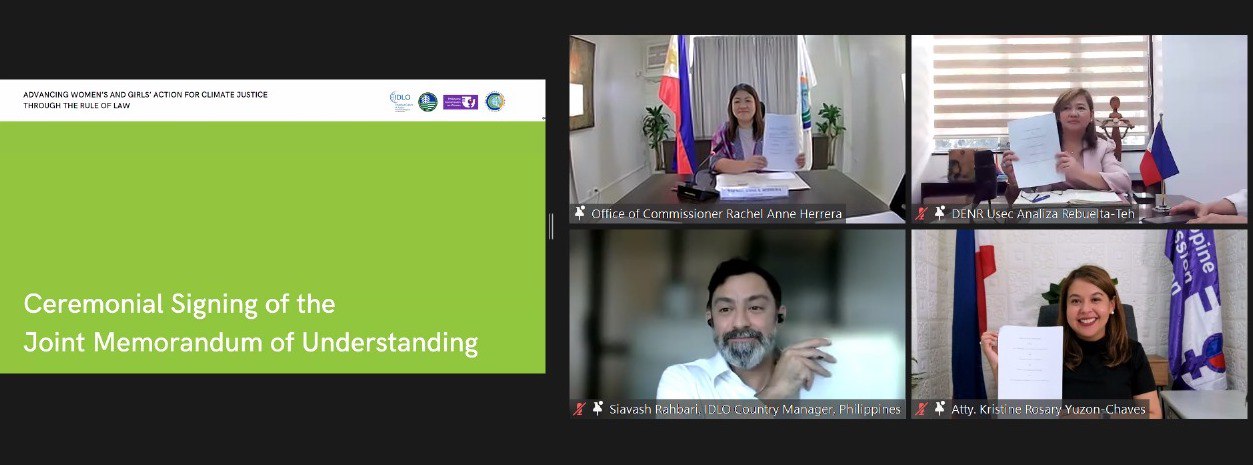
The Climate Change Commission convenes a multi-sectoral cooperation signing to accelerate climate action and recognize the vital contributions of partners across sectors in the fight against climate change.   MANILA – The Climate Change Commission (CCC) continues to strengthen the country’s climate agenda through a whole-of-nation approach that brings government, academe, civil society, and the private sector into unified action toward a climate-resilient Philippines. The CCC signed a Memorandum of Understanding (MOU) with partners from various sectors to reaffirm and establish a shared climate agenda. Anchored in the theme “Strengthening Partnerships for Climate Action: Multi-Sectoral Cooperation Signing,” the initiative underscored the crucial role of collective work in addressing the climate crisis. Partners represent a wide range of sectors, including the National Commission on Indigenous Peoples, government-owned and controlled corporations, Save the Children, Planoteerism, University of the Philippines Los Baños, Philippine Information Agency, Nueva Vizcaya State University, First Gen, and the United Nations World Food Programme. “In this critical decade, action cannot be delayed, and it cannot be shouldered by any single institution alone. This is the powerful truth that brings us together: climate change demands a whole-of-society response,” said Vice Chairperson and Executive Director Robert E.A. Borje of the CCC. The signing formed part of the activities under the 18th Global Warming and Climate Change Consciousness Week (CCC Week). “This signifies our solemn covenant between the NCIP and the CCC, alongside our partners. For us, this MOU is a powerful mechanism that ensures the wisdom and practices of Indigenous Cultural Communities are recognized, interfaced, and integrated,” said NCIP Chairperson Marie Grace T. Pascua. Nueva Vizcaya State University College Dean Jessie Pascual P. Bitog likewise emphasized the need for collaborative work to confront the global crisis. “We recognize that no single institution can address the climate crisis alone. Our experts are networked, and resources across our sectors create a powerful synergy that enables faster, broader, and more meaningful climate action.” Partners pledged, among other commitments, to advance joint climate communication and advocacy, support inclusive research, enhance local resilience, and strengthen climate change and disaster risk management through collaborative research, technical support, and policy guidance. The event also recognized individuals and long-standing partners for their contributions to climate action. Their dedicated efforts help build a climate-smart and climate-resilient Philippines. The CCC’s partners come from various sectors, including national government agencies, the private sector, civil society organizations, academic institutions, state universities and colleges, and media partners. All have demonstrated strong dedication and consistent support through awareness campaigns, technical assistance, and green initiatives. CCC Deputy Executive Director Romell Antonio O. Cuenca expressed his appreciation to the partners. “It is our privilege to honor the contributions of our partners. This recognition affirms the dedication and innovation each of you brings to this crucial fight. Your work inspires us all and sets the foundation for the results we continue to strive for.” The CCC remains steadfast in pursuing a whole-of-nation and whole-of-society approach to advance inclusive, progressive, and climate-resilient development for all Filipinos. For more information on the CCC’s climate mainstreaming activities, visit www.climate.gov.ph and www.facebook.com/CCCPhl.
November 27, 2025 Thursday
Commissioner Rachel Anne Herrera of the Climate Change Commission with the organizers and participants of the Aus4ASEAN Sustainable Energy Transition and Green Skills Fellowship Regional Immersion. 24 November 2025 | Makati City —- The Climate Change Commission (CCC) called for deeper regional cooperation on shared policy standards, harmonized green jobs data, technology transfer, cross-border energy integration, and joint financing mechanisms to de-risk renewable energy projects at the Aus4ASEAN Sustainable Energy Transition and Green Skills Fellowship Regional Immersion. CCC Commissioner Rachel Anne S. Herrera, in her keynote address, noted that according to the 2024 Asia Pacific Climate Report, the energy sector—responsible for 77.6% of greenhouse gas emissions in developing Asia—is both the region’s most critical challenge and its most powerful opportunity. She stressed that while renewable energy investments are rising, a truly resilient transition requires systems that are “just, inclusive, and grounded in people’s lived realities.” Herrera highlighted the Philippines’ coherent energy transition framework anchored in  the Nationally Determined Contributions (NDC) and the NDC Implementation Plan (NDCIP). She outlined concrete energy-sector policies and measures, including expanding the share of renewables, strengthening energy efficiency and conservation, promoting low-carbon transport, and advancing the creation of smart grids and ensuring continuous power supply for remote and climate-vulnerable communities. These measures are supported by long-term strategies under the National Climate Change Action Plan (NCCAP),  National Adaptation Plan (NAP), and Philippine Energy Plan (PEP) 2020–2040, which targets 35% renewable energy by 2030 and 50% by 2040. Herrera also underscored the growing momentum among Philippine companies transitioning to low-carbon operations—highlighting geothermal leadership, reforestation partnerships, solar PV deployment, and industrial decarbonization efforts. She cited Ormoc City’s geothermal-powered development and solar-powered irrigation, as well as Marikina City’s low-emission strategy pursued through efficient public buildings and protected bicycle lanes, as examples of how national energy policy becomes meaningful at the community level. Central to her message was the principle of inclusion. Herrera emphasized that a just transition must support workers; micro, small, and medium enterprises (MSMEs) women; youth; and vulnerable sectors. She also noted that consultations for the updated NDC ensure that youth, women’s groups, farmers, and indigenous communities help shape the Philippines’ future energy pathway. She reaffirmed the Philippines’ strong commitment to the UNFCCC Just Transition Work Programme, stating that climate change requires solutions built on solidarity and shared responsibility. “You are not just participants—you are partners in shaping our region’s future,” Herrera said. “Let us lead this transition together—with purpose, with community, and with each other.” Organized by the Australian Government’s Department of Foreign Affairs and Trade (DFAT), the program convened youth energy and climate leaders from across ASEAN to explore regional leadership, policy pathways, and practical examples of low-carbon transformation.
November 24, 2025 Monday
The Climate Change Commission (CCC) partners with the University of the Philippines Los Baños - Interdisciplinary Studies Center for Integrated Natural Resources and Environment Management (UPLB-INREM) to advance science- and nature-based climate action by launching the country’s first carbon-neutral international conference through INREM 2025.   MANILA, 20 November 2025 — The Climate Change Commission (CCC) strengthened its strategic partnership with the academic sector at the 5th International Conference on Integrated Natural Resources and Environment Management (INREM 2025), reinforcing the critical role of science- and nature-based solutions in building a climate-resilient Philippines. Held from 18 to 20 November, the conference was launched as the country's first carbon-neutral international conference. The event, co-developed and supported by the CCC, was organized by the University of the Philippines Los Baños - Interdisciplinary Studies Center for Integrated Natural Resources and Environment Management (UPLB-INREM). CCC Vice Chairperson and Executive Director Robert E.A. Borje, in his address, framed the national climate agenda from inspiration to actionable strategy. “Nations do not rise on strength alone—they rise on understanding. You—our scientists, researchers, policymakers—are the light that steadies the nation in moments of uncertainty. You take complex realities and render them knowable, actionable, and life-saving,” Borje said. He praised it as a “profound declaration” and a “new national benchmark.” Borje emphasized, “This is more than an event; it's a tangible, science-driven pathway that directly advances our National Adaptation Plan and our Nationally Determined Contribution. Carbon neutrality, powered by our natural ecosystems, is INREM 2025’s game-changer.” Senator Loren Legarda, in her keynote address, underscored the urgency of the gathering. “When nature-based solutions, INREM integration and strong policy move in one direction, a clear vision emerges. One that restores the systems that we have damaged and turns them into our strongest defenses.” Department of Environment and Natural Resources (DENR) Secretary Raphael P.M. Lotilla, also speaking at the conference, underscored the need for synergy, stating, “We are also strengthening partnerships with local governments, academic institutions, development organizations, and Indigenous Peoples—ensuring that environmental management is not just a government mandate, but a shared national movement.” On Day 3, Borje delivered the keynote address, synthesizing the conference's outcomes into a national call to action. He highlighted, “We cannot choose the climate we are born into. But we can choose the country we build in response to it. Let us build a Philippines that stands not as a symbol of risk, but as a beacon of readiness, innovation, and unity.” He stressed that integrated approaches and Nature-based Solutions (NbS) are not merely environmental goals but are central to the nation’s climate-proofed development. The collaboration at INREM 2025 underscores the CCC’s commitment to strengthening the science-policy interface and mainstreaming low-carbon, nature-based practices across all sectors, in direct partnership with the scientific community. The INREM 2025 served as a crucial platform for knowledge-sharing on managing lake and river basins, seascapes, and rural-urban systems, with the overarching goal of establishing communities of practice to promote NbS and INREM principles in policymaking and implementation across the Asia-Pacific region. For more information on the CCC’s climate mainstreaming activities, visit www.climate.gov.ph and www.facebook.com/CCCPhl.
November 21, 2025 Friday
The Climate Change Commission, in partnership with the National Power Corporation and the Municipal Government of Paete, Laguna, convenes the 4th tree growing activity at the Caliraya-Lumot Watershed in Paete, Laguna PAETE, Laguna –The Climate Change Commission (CCC), in partnership with the National Power Corporation (NPC) and the Municipal Government of Paete, Laguna, kicked off the 18th Global Warming and Climate Change Consciousness Week with a Tree Growing Activity at the Caliraya-Lumot Watershed to strengthen nature-based solutions  The initiative, known as Net Zero Challenge (NZC), forms part of the CCC’s continuing efforts to strengthen carbon offsetting and climate resilience, reflecting the urgency to continuously address the impacts of climate change, such as the recent and stronger typhoons. NZC underscores the critical role of forests in safeguarding communities and supporting the country’s pathway toward climate resilience. Robert E.A. Borje, Vice Chairperson and Executive Director of the CCC, emphasized the importance of stronger forest protection and restoration. His message was delivered by CCC Deputy Executive Director Atty. Romell Antonio O. Cuenca, who stated: “Sa harap ng ganitong mga trahedya, muling nakita ang napakahalagang papel ng ating mga kagubatan — ito ay bilang proteksyon laban sa pag baha at landslide, isa sa mabisang carbon sink na nagpapababa ng greenhouse gasses at nakatutulong magpababa ng temperatura ng ating atmospera.” Started in August 2023, the Net Zero Challenge aims to plant more than 15,000 seedlings across 25 hectares at the Caliraya-Lumot Watershed in Paete, Laguna by 2030 in alignment with the country’s commitment under the Paris Agreement to reduce greenhouse gas emissions and limit global warming. A total of 400 seedlings of banaba, langka, and acacia were planted during the event. Borje emphasized this message, anchoring it on the vision of President Ferdinand R. Marcos Jr. for strengthened collaboration across all sectors.  “Ang epektibong climate action ay hindi kakayanin ng isang ahensya o isang sektor lamang. Kailangan natin ang whole-of-government at whole-of-society approach—mula pambansang pamahalaan, LGUs, pribadong sektor, kabataan, at mismong komunidad.” Jericho Jonas B. Nograles, NPC President, reaffirmed the agency’s commitment to the initiative through a message delivered by Vincent B. Concio, Division Manager from NPC. “We reaffirmed our strong commitment to this shared responsibility of being co-stewards of nature. Today’s tree growing activity under the Net Zero Challenge in celebration of the 18th Global Warming and Climate Change Consciousness Week is more than a day’s gathering, it’s a call to action of a whole-of-society approach towards strengthening collaboration against the impacts of climate change.” The NZC is the CCC’s carbon neutrality program that aims to contribute to global efforts to limit temperature rise to 1.5°C, as the reforestation of the 25 hectares at the Caliraya-Lumot Watershed is expected to sequester an estimated 75.5 metric tons of carbon dioxide. Present during the activity were representatives from the private sector, including Holcim Philippines, Inc. and Ahunan Power, Inc.; national government agencies such as Philippine Red Cross Region 4A (PRC R4A), Department of Environment and Natural Resources – Provincial Environment and Natural Resources Office (DENR PENRO), and Department of the Interior and Local Government – Laguna (DILG Laguna). The local government unit of Paete, Laguna, as well as development partners, state universities and colleges, civil society organizations, and media partners, also participated in the tree growing initiative. The CCC continues to work closely with the private sector, local governments, and communities to accelerate climate resilience, strengthen carbon sequestration efforts, and advance the country’s transition toward a climate-smart and sustainable future. For more information on the CCC’s climate mainstreaming activities, visit www.climate.gov.ph and www.facebook.com/CCCPhl.
November 20, 2025 Thursday
The Climate Change Commission (CCC) emphasized that the nation's greatest strength lies in the women, MSMEs, and communities that are already leading the way, at the Clean Tech Talks: Bridging Climate-Resilient Communities, Clean Technology Transition, and Capacity Building on Renewable Energy and Low Carbon Solutions with Government Partners and Women Entrepreneurs organized by UN Women held in Pasay City. MANILA, Philippines | 20 November 2025 — The Climate Change Commission (CCC) underscored the critical role of women and youth, micro, small and medium-sized enterprises (MSMEs), and local government units (LGUs) in risk-informed planning to strengthen the nation’s climate resilience during the Clean Tech Talks 2025, held under this year’s Global Warming and Climate Change Consciousness Week with the theme, “Makabagong Kilusan para sa Klima at Kinabukasan.” In his remarks, CCC Vice Chairperson and Executive Director Robert E.A. Borje emphasized that resilience begins by equipping those at the center of action with the tools and opportunities to thrive in a changing climate. “Clean tech is where science meets survival, and survival meets opportunity. It is how we prevent loss instead of admiring resilience. It is how we safeguard livelihoods before they break. It is how we uplift communities before crises deepen,” Borje said. He also stressed that national frameworks must translate into direct benefits at the local level. “Frameworks only succeed when they reach the communities they are meant to serve,” he noted. To support this, the CCC highlighted how its Active Climate Change Engagement Leading to Resilient, Adaptive, and Transformative Empowerment (ACCELERATE) Framework strengthens LGUs’ capacity for risk-informed planning, enables MSMEs to adopt sustainable and circular solutions, equips women and youth with access to clean technologies and finance, and improves climate budgeting and knowledge across government. Borje added that strengthening the “center” of national resilience—making them informed, equipped, and supported—is what makes the country stronger. "When we strengthen the center—the women who lead, the MSMEs who innovate, the LGUs who deliver, and the communities whose future we are sworn to protect—we shift from resilience as recovery to resilience as protection, prevention, and permanence," he said. Meanwhile, Ma. Rosalyn Mesina of UN Women gave emphasis on renewable energy as a climate solution. “Renewable energy is not only a climate solution, it is an economic lifeline. Clean technologies can reduce energy costs for women entrepreneurs, expand their livelihood opportunities, and safeguard businesses from disaster-related disruptions,” Mesina explained. The event brought together clean technology providers, women entrepreneurs, local governments, financial institutions, and private sector actors to highlight the growing role of clean and renewable technologies in strengthening women’s economic empowerment and building climate-resilient livelihoods. It also advanced the goals of the EmPower Programme, jointly implemented by UN Women and the UN Environment Programme (UNEP), which supports women-led enterprises and promotes gender-responsive clean energy transitions. Aligned with the administration’s climate agenda and the President’s call for Makabagong Kilusan that is climate-smart and inclusive, the Clean Technology Talks 2025 served as a platform to expand partnerships and create pathways for collaboration, linking clean tech providers, financial institutions, government agencies, and women’s networks. The two-day event also provided a marketplace and training platform to build the capacities of women entrepreneurs, NGAs, and LGUs on renewable energy systems, clean technologies, and low-carbon solutions—advancing community-level empowerment and strengthening local climate resilience.
November 20, 2025 Thursday
The Climate Change Commission (CCC) and the Philippine Commission on Women (PCW) formalize a partnership to strengthen gender-responsive and inclusive climate action. This initiative was part of the 18th Global Warming and Climate Change Consciousness Week. MANILA | 20 November 2025 — The Climate Change Commission (CCC), in partnership with the Philippine Commission on Women (PCW), has launched a joint work plan to strengthen gender-responsive and inclusive climate action that places gender balance at the core of climate governance. The work plan highlights the shared commitment of both institutions to advance climate resilience by ensuring that women’s leadership, perspectives, and capacities inform national and local climate actions. Both CCC and PCW recognize the urgent need to address gender gaps in climate planning, implementation, and monitoring. This shows the importance of an inclusive and gender-balanced approach that enables women to fully participate in climate decision-making and benefit equitably from climate programs. CCC Vice Chairperson and Executive Director Robert E.A. Borje emphasized the critical role of women in building resilient communities and shaping climate policies. “Today, we recognize that truth—not by placing women on the margins of our frameworks, but by putting them at the center of our climate actions, policies, and investments.” The work plan aims to enhance gender-responsive climate policies and systems, strengthen institutional commitment to gender-responsive initiatives, and ensure the widespread adoption of gender-responsive tools and approaches across climate programs. Key outcomes are paired with indicators designed to sustain a gender-responsive system. These include: nationwide consultations with strong women’s representation for the Gender Action Plan of the National Adaptation Plan and the Nationally Determined Contribution; ensuring that all climate programs apply a gender lens from design to delivery; and institutionalizing the commitment of all sectors to use gender-responsive standards and tools. Borje added, “The true measure of this joint programme will be felt in the everyday lives of Filipinos—in safer communities, strengthened livelihoods, and more women empowered to shape climate action at the center of decision-making.” PCW Chairperson Ermelita V. Valdeavilla, represented by Executive Director Nharleen Santos-Millar, also highlighted the value of this collaboration. “This partnership allows us to combine efforts, raise awareness, and inspire action more effectively than we could alone. Like twins, it reminds us that we are stronger and more effective when we move together toward a common goal.” Also present during the signing were Commissioner Rachel Anne S. Herrera of CCC and Mr.  Macario Jusayan, Deputy Executive Director for Management Services of PCW. The CCC continues to collaborate with various agencies and partners to advance inclusive, gender-responsive, and people-centered climate action that strengthens resilience across all sectors. For more on the CCC's clmate mainstreaming activities, visit www.climate.gov.ph and www.facebook.com/CCCPhl.
November 20, 2025 Thursday
MANILA, Philippines | 19 November 2025 — President Ferdinand R. Marcos Jr. reaffirmed the administration’s strong commitment to climate action in a video message delivered marking the observance of Global Warming and Climate Change Consciousness Week (CCC Week) 2025. The President emphasized that the annual observance reflects the country’s shared aspiration to build “a climate-resilient and environmentally sound nation.” He underscored that the week-long event serves as an essential platform for policymakers, scientists, private institutions, and communities to align national priorities with global climate commitments and the broader sustainable development agenda. President Marcos highlighted the vital role of all sectors in strengthening the country’s resilience through responsible resource use and the integration of climate intelligence in planning and decision-making. “As Chairperson of the Climate Change Commission, I reaffirm our determination to confront the challenges of climate change with decisive action, especially now as we continue to recover from the impact of recent calamities,” the President said. He cited ongoing government initiatives—including the National Adaptation Plan, the Nationally Determined Contribution Implementation Plan, and expanded programs in renewable energy, sustainable agriculture, and climate finance—as key pillars in building a more secure and inclusive future for all Filipinos. With this year’s CCC Week theme, Makabagong Kilusan Para sa Klima at Kinabukasan, President Marcos urged Filipinos to actively support national efforts to enhance climate resilience. He called on citizens to view climate action not only as a responsibility but also as a path toward long-term prosperity. “As we realize our vision of a Bagong Pilipinas, let us uphold climate governance, protecting the beauty and bounty of our land while ensuring the welfare of generations to come,” he said. Climate Change Commission Vice Chairperson and Executive Director Robert E.A. Borje thanked the President for his steadfast leadership and direction in strengthening the country’s climate agenda. “We thank President Marcos for his continued guidance and commitment. Under his administration, we will continue to advance policies and actions that safeguard our people and secure our future,” Borje said. Under the Marcos Administration, the CCC was able to complete key transformative climate policy frameworks and submissions to the UNFCCC, including the Philippines’ first National Adaptation Plan, the Nationally Determined Contribution Implementation Plan, updated Greenhouse Gas Inventories, and the Philippines’ Biennial Transparency Report. President Marcos concluded with a message of solidarity and hope, encouraging all participants to pursue meaningful engagement throughout the week’s activities.
November 19, 2025 Wednesday